
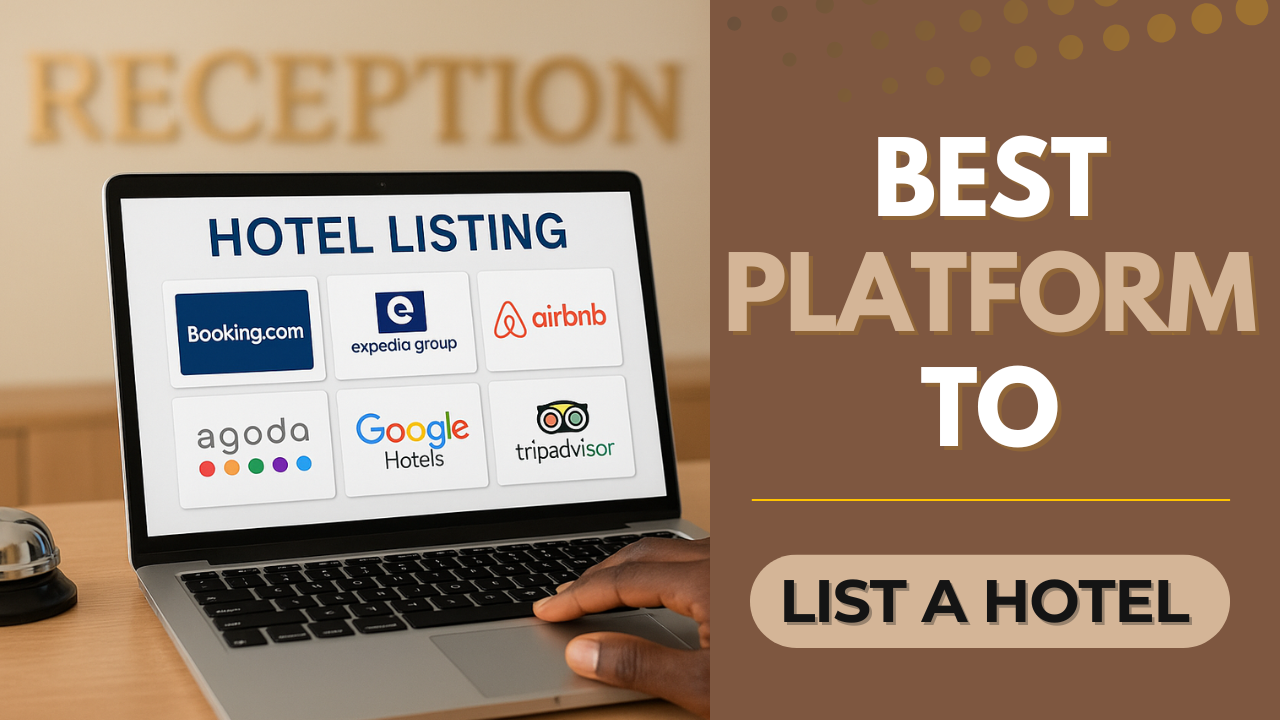
In today’s hospitality world, a hotel’s online presence is more important than ever. Guests discover and evaluate hotels long before they reach the destination. Your listing on booking platforms is now your first impression your digital reception desk. Understanding Best Platforms to List a Hotel, how each platform works, and how to manage them professionally can transform your occupancy, pricing, and reputation.
This guide explains the best platforms to list a hotel, the type of travelers each platform attracts, how to manage listings effectively, and the challenges hoteliers commonly face. It is written for hotel owners and managers who want a clear, human explanation of how to succeed with OTAs and direct bookings.
Best Platforms to List a Hotel start with Booking.com remains the most powerful platform for hotel visibility. It receives millions of searches every day and is trusted by guests for its transparency, flexible cancellation policies, and easy booking process. Hotels listed on Booking.com usually benefit from a consistent flow of guests because the platform performs well across different traveler segments—leisure, business, families, and last-minute bookers.
What makes Booking.com effective is its search algorithm, which rewards good photos, detailed descriptions, strong guest reviews, and reliable availability updates. Hotels that optimize these areas often see higher rankings and better conversion rates.
Expedia is especially valuable for hotels that receive international guests or want to attract travelers booking longer stays. The platform includes several well-known brands such as Expedia.com, Hotels.com, Orbitz, and Travelocity. When you list on Expedia, your property appears across all these partner channels.
One of the biggest advantages of Expedia is that cancellations tend to be lower compared to Booking.com. It is also strong for packaged bookings such as flight + hotel combinations. This makes Expedia ideal for hotels located near airports, conference centers, national parks, and major attractions.
Airbnb has grown far beyond home rentals and today supports hotels, guesthouses, serviced apartments, and boutique lodges. Many travelers browse Airbnb before traditional booking sites because they want character, comfort, and local experiences.
Hotels that perform well on Airbnb are usually those with unique features design-focused spaces, warm service, community connections, or apartment-style rooms. Airbnb also gives hotels the opportunity to communicate with guests in a more personal and friendly way, which can lead to longer stays and improved guest satisfaction.
Agoda is popular among Asian travelers and is expanding rapidly in Africa. It is particularly effective for hotels that want to diversify their market and attract guests from countries such as Singapore, China, Japan, Thailand, and Korea.
Hotels that offer competitive pricing tend to perform well on Agoda because the platform is known for strong promotions and last-minute deals. Agoda is also useful for destinations with increasing Asian tourism or for hotels near major landmarks and city centers.
Google Hotels and Google Business Profile
Google has become one of the most influential platforms in the travel decision process. When guests search phrases like “hotels in Kigali,” “hotels near Convention Centre,” or “best hotels in Musanze,” Google decides which hotels appear first.
A well-optimized Google Business Profile allows your hotel to:
- Appear in local searches
- Display accurate pricing, photos, and reviews
- Drive visitors directly to your website
For many hotels, Google is the strongest channel for commission-free bookings. It also builds trust because travelers consider Google’s information credible.
Even if guests don’t book through TripAdvisor, they often check it before making a final decision. Reviews have a major impact on booking behavior, especially for international travelers who rely heavily on reputation.
A strong TripAdvisor presence can:
- Improve your ranking on Booking.com and Expedia
- Increase trust
- Encourage more direct website visits
Hotels that consistently respond to reviews and demonstrate transparency tend to perform better across all booking platforms.
Jumia Travel focuses on African travelers and is suitable for hotels that want more domestic or regional bookings. It works particularly well for budget and mid-range hotels, as well as guesthouses targeting local family travel, business trips, or weekend stays.
While OTAs bring visibility, your hotel’s website remains your most profitable booking channel. Direct bookings come with zero commission, stronger brand control, and direct communication with guests.
A good hotel website should clearly present:
- Room types
- Prices
- Amenities
- Location
- Photos
- Contact information
- A smooth booking engine
Your website should not compete with OTAs—it should complement them. OTAs bring the traffic; your website converts loyal guests.
Which Platform Fits Your Hotel Best?
Different hotels attract different types of guests, so your choice of platform should match your market.
City hotels tend to perform well on Booking.com, Expedia, and Google.
Boutique hotels and serviced apartments often succeed on Airbnb.
Lodges near attractions benefit from Booking.com, Agoda, and TripAdvisor.
Budget hotels and guesthouses may gain more from Jumia and Google searches.
The best strategy is to use a combination of platforms rather than relying on a single OTA.
How to Manage Your Hotel Listings Effectively
Managing your listings professionally is just as important as choosing the right platforms. Here are the essentials:
High-quality photos
Your photos are your first impression. Hotels with bright, clean, well-framed images consistently receive higher booking interest.
Clear descriptions
A good listing explains what the hotel offers, what makes it unique, and why a guest should choose it. Clarity reduces cancellations and increases satisfaction.
Rate consistency
Prices across all platforms should match. Inconsistent pricing confuses guests and can negatively affect your ranking.
Calendar synchronization
Using a Property Management System (PMS) or channel manager ensures your availability updates automatically, reducing the risk of double bookings.
Fast communication
Most platforms reward hotels that respond quickly to guest inquiries. A fast reply increases trust and helps your property appear more responsive and reliable.
Requesting reviews
Reviews remain one of the strongest ranking factors across OTAs. Encourage happy guests to leave feedback.
Common Challenges and How to Solve Them
Many hotels face similar challenges when managing booking platforms. Understanding these issues helps you avoid them.
- Low visibility often comes from weak photos, poor descriptions, or lack of recent reviews.
- Double bookings happen when calendars are managed manually.
- Pricing issues occur when rates are changed on one platform but not updated on others.
- Too much OTA dependence reduces profit because commissions add up quickly.
- Service inconsistencies lead to negative reviews, affecting your ranking everywhere.
Most of these challenges are solvable through better systems, better communication, and better content.
Conclusion
Listing your hotel on booking platforms is essential, but success comes from strategy and consistency. Each platform brings a different type of guest and plays a different role in your overall distribution plan. When hotels understand these differences and manage their listings professionally, they achieve higher occupancy, stronger reputation, and healthier revenue.
This expertise reflects what we have learned in the hospitality industry and through working closely with hotel owners. At Nyurwa Hospitality, we support hotels in improving their systems, strengthening their service culture, and managing digital visibility in a way that leads to real, long-term growth.